
Spiffy
About
Checkout platform with affiliate tracking on every plan, from $99 a month with 0% platform fees. It tracks commissions and exports a CSV. You send the money.
Spiffy puts affiliate tracking on its cheapest plan, $99 a month, and adds 0% on top of your processor's fees. Next to the other built-ins in this directory, that's a low door. Kartra wants $229 a month before affiliates switch on, Kajabi $249 and ClickFunnels $297.
Then payday arrives. Spiffy's payout guide puts it in one line: "Spiffy does not process any commission payout transactions." You export a CSV, send the money yourself, and come back to mark it paid.
I haven't run a program on Spiffy. This is a research listing, built from spiffy.co's pricing, product and legal pages and the Spiffy University help docs, all first-party. Third-party claims are marked.
The history
Spiffy began as GoSpiffy, an add-on that made Infusionsoft's order forms work on a phone (third-party: Course Method's tool page, and co-founder Michael Hunter tells the same story in a SegMetrics interview). Hunter ran a marketing agency for authors and coaches first, then built Spiffy with a co-founder named Jeremy and no outside funding (third-party: the saas.group podcast, episode 37). G2 lists the founding year as 2016 and the head office as Tempe, Arizona. The legal name on the terms is Paperplane, LLC.
The standalone checkout on Stripe and PayPal came later. Affiliate tracking shipped in the July 2022 release, which makes it one of the younger affiliate features in this category.
The origin matters. PayPal grew up as the pay button on eBay listings, eBay bought it for $1.5 billion in 2002, and it took until 2015 to become its own company again. Tools born inside someone else's platform learn that platform's customers very well. Spiffy's customers are still the coaches, course sellers and membership owners it met through Infusionsoft, and the affiliate feature is built around how they sell: subscriptions, payment plans and upsell flows.
On reputation: G2 shows 5 out of 5 from 15 reviews (third-party, and a small sample). I found no complaints to weigh against it.
Who it's for
Course sellers, coaches and membership owners who already take payments through Spiffy, or want a standalone checkout in front of Kajabi, Thinkific or Circle, and want affiliates tracked where the sale happens.
Small programs. Pro covers one program and 100 active affiliates, which is plenty for a creator with a few dozen partners.
Subscription sellers who want one commission rate for monthly plans, another for annual plans, and a set number of months that the commission runs.
Who should skip it
Anyone who wants the software to pay affiliates. Spiffy tracks and exports. The paying is yours.
Anyone who needs a special rate for one star affiliate. Overrides are set per product, per subscription plan or per checkout. I found no per-affiliate rate in the setup docs, so the only route I can see is a second program, and Pro gives you one.
Anyone who needs tax forms collected or 1099s issued.
Anyone who needs a second tier. I found no mention of one.
Anyone selling outside Spiffy's checkout. The program tracks Spiffy orders only.
Pricing, decoded
- Pro: $99 a month, or $74 a month billed yearly ($888). 1 affiliate program, 100 active affiliates, 20 active checkouts, 3 team members. Pitched at businesses under $250k a year.
- Business: $299, or $224 on annual ($2,688). 3 programs, 300 active affiliates, 50 checkouts. Adds affiliate lead tracking, custom link slugs and UTM campaign stats.
- Scale: $499, or $374 on annual ($4,488). 5 programs, unlimited affiliates.
- Enterprise: custom.
- 0% Spiffy fee on every plan. Stripe or PayPal still take theirs.
- 14-day free trial on Pro and a 30-day money-back guarantee for new customers. No free plan.
Paying yearly on Pro saves $300: $1,188 against $888.
The jump that matters is Pro to Business. It's $200 a month more, or $2,400 a year. For an affiliate program, that money buys affiliates 101 to 300, a second and third program, custom link slugs, UTM stats and lead tracking. If the affiliate limits are the only thing pushing you up, price the other route first. Spiffy integrates with FirstPromoter, and FirstPromoter at $49 a month is $588 a year and handles the payouts too.
The odd line on the pricing page is the order velocity cap: 100 orders an hour on Pro, 300 on Business, 750 on Scale, and $0.12 an order beyond it. A launch hour with 400 orders on Pro is 300 over the cap, or $36. Small money. The page doesn't explain how the hour is measured or how the charge is billed, so ask before a big launch.
Payouts: the part to understand
The routine has four steps. Filter the commission report, export the CSV, pay people through PayPal, cheque, Venmo, Zelle or whatever you use, then mark the commissions paid.
Three rules in the payout docs deserve a slow read. A payout can't be deleted once you begin it. A payout marked paid can't be reversed. And starting a new bulk payout while one is in progress replaces the old one.
"Payout Eligible" is a toggle you flip by hand on each affiliate after you've received their W-9 or other tax form. Spiffy doesn't collect the form, and I found nothing about it issuing 1099s. I also found no minimum payout and no hold period in the docs. The filters are yours to set, which means the refund window is yours to remember.
Luca Pacioli printed the first description of double-entry bookkeeping in Venice in 1494. For five centuries a ledger has told merchants who is owed what, and it has never paid anyone. Spiffy's affiliate feature is a good ledger.
What it does well
The price of entry. Affiliates are on every plan, with 0% in platform fees.
Commission rules for subscriptions. You set default percentages for one-time items and for subscriptions, add a flat amount per order if you like, then override by product, subscription plan or checkout. A plan override sets the rate and how many months it runs. Commissions are calculated on cash collected, so a payment-plan sale pays out as the instalments arrive, and refunds claw back.
Tracking through the funnel. Attribution follows the buyer through upsell and downsell flows, and the cookie is set on Spiffy's domain and on yours.
A portal that looks like your business. Affiliates log in with an emailed magic link, the emails come from your support address with your branding, and custom domains cover affiliate links, the registration form and the portal.
An MCP connection. Spiffy's "AI Superpowers" feature links an AI app to your account for reports, exports, orders and subscriptions. I couldn't confirm any affiliate actions in it. The terms put the outcome of anything an AI app does in your account on you, refunds and cancellations included.
Lock-in: 3 out of 5
What gets you out: monthly billing with no long contract. The commission report exports to CSV, and the affiliate performance report exports clicks, leads, sales, commission and revenue per affiliate. Affiliate links can run on your own domain, which by my reading means you decide where they point after you leave. I found no shared marketplace or universal affiliate login, so your affiliates are your contacts and nobody else's.
What keeps you in: tracking works on Spiffy checkouts only, so leaving the checkout means leaving the program. Cancelling takes an email to support plus a cancellation form, at least three business days before your billing date. Your data is kept for at least 60 days after you cancel and isn't guaranteed after that, unless you pay for a reduced-price "hibernation plan". The terms let Spiffy end your access for any reason, without notice. And I couldn't confirm that any export carries your affiliates' contact details, so check before you rely on it.
Three. The program leaves with a CSV and a redirect, but the subscriptions you sold through the checkout are a migration project.
Gotchas
- Spiffy never pays your affiliates. CSV out, pay elsewhere, mark paid. Every plan.
- Payouts can't be undone. Begun means it can't be deleted, paid means it can't be reversed, and a new bulk payout replaces one in progress.
- Tax forms are on you. You collect the W-9, you flip the toggle, you file whatever your country requires.
- No approval queue. Anyone who registers joins your default program automatically. If you vet affiliates, the docs' own advice is to set no default program and add people by hand.
- Renaming an affiliate's slug kills their links. The setup guide warns that "existing links will no longer work." Tim Berners-Lee wrote "Cool URIs don't change" for the W3C in 1998. It's still the rule, and every blog post your affiliate ever published is the reason.
- Custom slugs, UTM stats and lead tracking need Business. That's $299 a month.
- Pro stops at 100 active affiliates and one program. "Active" is described only as affiliates who can promote offers and earn tracked commissions.
- Last touch only. The conversion window is 30, 60 or 90 days, set once for the whole account, and 30 is the default.
- Cross-domain tracking wants hosted checkouts. Spiffy's script has to sit on every page of your site. If your promotion spans more than one domain, the docs say to use the Spiffy-hosted checkout and skip the embedded one.
- Order velocity overage. $0.12 an order past the hourly cap, with the rules not spelled out.
- Cancel by email and form, three business days ahead. No refunds after the first 30 days, and none for setup or migration services.
- Spiffy's own referral program pays 20% of each payment, for up to 12 monthly payments or the first annual payment, by PayPal each quarter. It normally needs an active paid Spiffy account. The referral terms say a 30-day last-click window. I've also seen 90 days attached to the sign-up page, so confirm which applies.
- Setup: two out of five if you're already on Spiffy. Create the program, assign products and plans, add the script, turn on registration.
Integrations
Payments: Stripe and PayPal on every plan. Spiffy Payments, its own merchant gateway, starts at Business.
CRM and email: ActiveCampaign, HubSpot, Keap, Kit, Flodesk, Drip, Mailchimp, Zoho and GoHighLevel.
Courses and community: Kajabi, Circle, Mighty Networks, MemberPress, Thinkific and Uscreen.
Everything else: Zapier, Make, webhooks and an API.
If you'd rather run affiliates in a dedicated tool, Spiffy's integrations page lists FirstPromoter, LeadDyno and Rewardful, with Spiffy still handling the checkout.
Not supported: paying affiliates, collecting tax forms, per-affiliate rates (none that I found), and tracking for sales made outside Spiffy.
If you're leaving
Export the commission report and the performance report for every period you'll need to reconcile. Pay everything owed and mark it paid before you cancel. Copy your affiliate list with emails and payment details by hand if the exports don't carry them.
Send the cancellation email and the form more than three business days before your billing date. If your affiliate links run on your own domain, repoint it at the new tool. If they sit on a spiffy.co address, email every affiliate their new link before the old one dies. Then watch the 60-day clock on your data.
Don't want to do the move yourself? I can set up the new program for you.
Verdict
My opinion, labelled as such: if you already sell through Spiffy and have a few dozen affiliates, turn it on. It's included, the fee is 0%, the subscription commission rules are better than most built-ins manage, and a monthly CSV-and-PayPal routine is fine at that size.
If you'd be moving to Business only for affiliate reasons, don't. Stay on Pro and add FirstPromoter or Rewardful. Spiffy lists both as integrations, so the checkout stays where it is.
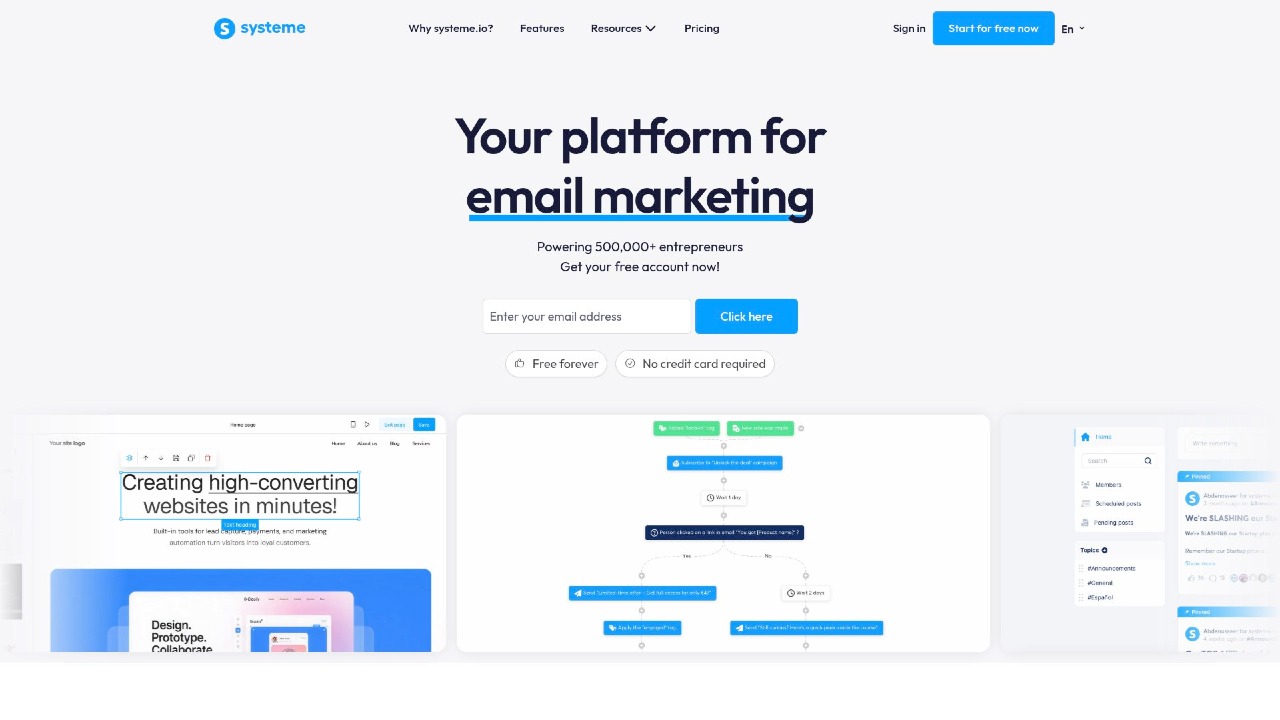
If you're not on Spiffy yet and the affiliate program is the point, ThriveCart is a checkout that sends the money itself, Kajabi runs scheduled payouts, and Systeme.io includes a simpler program for free.
Spiffy keeps a good ledger. Somebody still has to open PayPal.
Last verified November 26, 2026. Plan prices, limits, the order velocity cap and trial terms from spiffy.co/pricing. Commission rules, tracking, portal, registration and the payout process from Spiffy University (university.spiffy.co) and spiffy.co/product/affiliates. Cancellation, refund, data-retention and AI-connection terms from spiffy.co/legal/terms, updated July 18, 2026. Referral program terms from spiffy.co/legal/referral-program-terms. Founding details and the G2 rating are third-party. The author has not used Spiffy and has no affiliate relationship with it. Some links on this page are affiliate links.